Ta Prohm Tample: More Than a Tomb Raider Movie Set

Updated: Mar 8

For years, the only place I had seen Ta Prohm was in the movie Tomb Raider. But ever since watching it, I had a small travel dream — to one day walk through that temple in real life.
Hidden among the forests of the Angkor Wat complex stands one of the most fascinating temples in Southeast Asia — Ta Prohm.
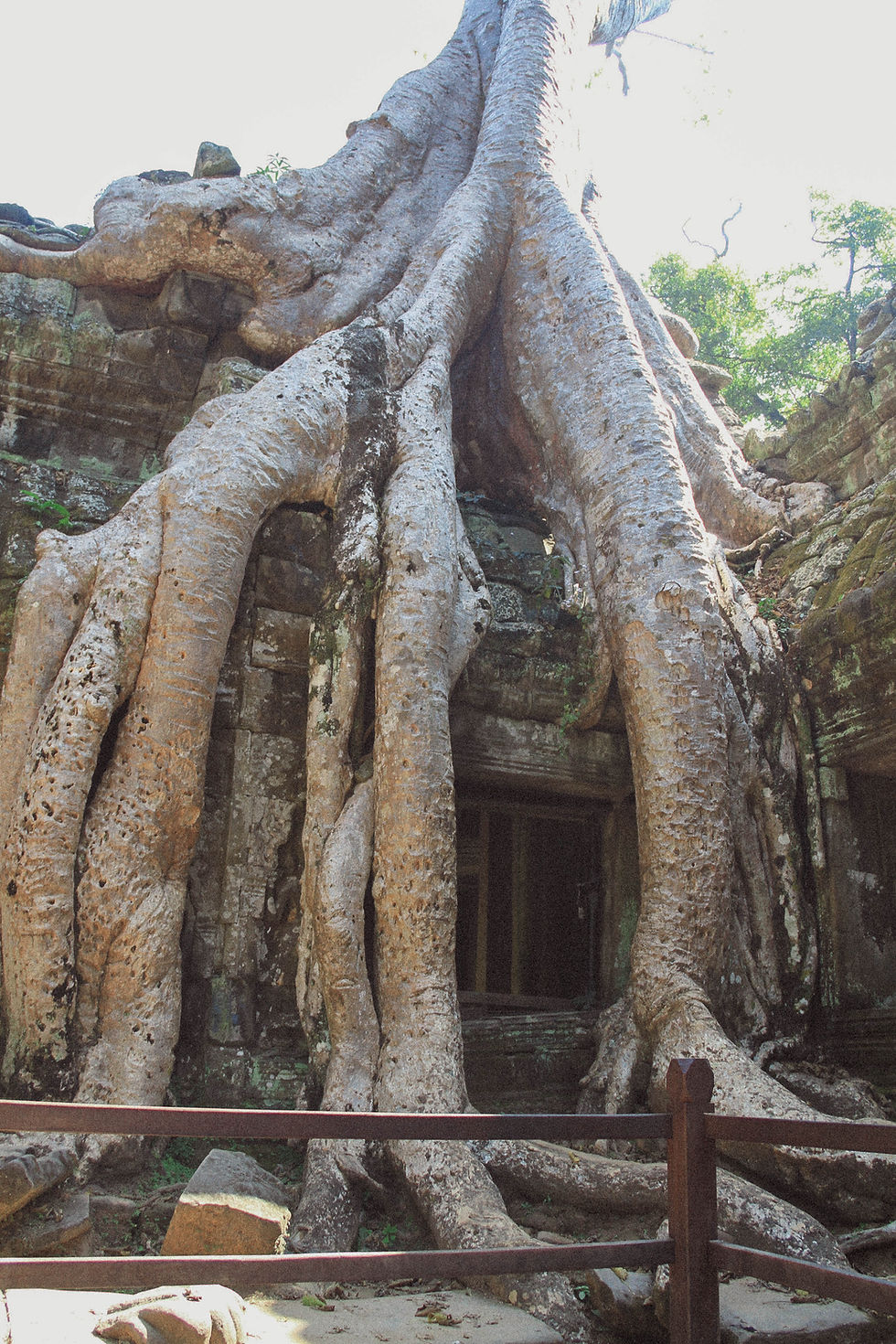
Unlike many other temples in Angkor, Ta Prohm was never fully restored. Instead of clearing the jungle away, conservationists made an unusual decision: they left many of the enormous trees exactly where they had grown.
The result is a place where nature and architecture seem locked in a slow, silent conversation.
A temple built for a king’s mother
Ta Prohm was built in the late 12th century by the Khmer king Jayavarman VII, one of the most powerful rulers of the Angkor Empire. He dedicated the temple to his mother and originally named it Rajavihara.
At its height, Ta Prohm was not just a temple but a huge religious complex. Ancient inscriptions suggest that more than 12,000 people lived and worked there, including priests, dancers, scholars, and temple attendants. Surrounding villages supported the temple with rice, fish, and other supplies.
Centuries later, much of that life disappeared — but the stone structures remained. And then the jungle slowly returned.
When trees become architects
What makes Ta Prohm unforgettable are the giant trees growing directly out of the ruins.
Massive silk-cotton trees and strangler figs stretch their roots across walls, wrap around doorways, and spill over ancient stones like slow-moving waves.
At first glance it almost looks unreal — as if someone carefully designed the scene for dramatic effect. But everything here happened naturally over hundreds of years.
In most archaeological sites, plants are removed to protect the ruins. At Ta Prohm, however, many of these trees were deliberately left in place to show what the temples looked like when explorers first rediscovered Angkor hidden in the jungle.
Walking through the temple today feels less like visiting a monument and more like stepping into a place where history and nature are still negotiating who is in charge.
The “Tomb Raider temple”
For many travelers, Ta Prohm looks strangely familiar even before they arrive.
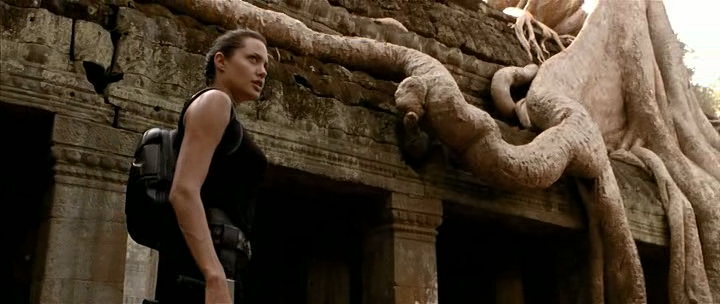
That’s because it appeared in the 2001 film Lara Croft: Tomb Raider, starring Angelina Jolie. One particular corner of the temple — where enormous roots spill over a collapsed wall — became famous after the movie.
Today visitors often refer to Ta Prohm simply as “the Tomb Raider temple.”
But the real place is much more interesting than the film set. Long before Hollywood discovered it, Ta Prohm had already been quietly impressing explorers, archaeologists, and travelers for decades.
A different kind of Angkor experience
Many temples in Angkor are impressive for their perfect symmetry, detailed carvings, and monumental scale. Ta Prohm feels different.
Here, the corridors are narrower. The light filters through jungle leaves. Roots twist through windows and across stone floors.
Instead of a grand architectural statement, the temple feels almost personal — as if the forest slowly adopted it.
That atmosphere is exactly what makes Ta Prohm one of the most memorable places in Angkor.
Visiting today

Ta Prohm lies just a short distance from Angkor Wat and is usually included in the popular “Small Circuit” temple route around the Angkor complex.
Because it’s one of the most photographed temples, it can become crowded, especially in the middle of the day. Many travelers prefer arriving early in the morning or later in the afternoon, when the light is softer and the crowds are thinner.
And when you find a quiet moment between the massive roots and ancient stones, it’s easy to understand why this place captures people’s imagination.
Ta Prohm isn’t just a temple.
It’s a reminder that even the greatest empires eventually return to the forest — and sometimes the forest decides to stay.


Comments