A Taste of Cambodia

Updated: Mar 8

Cambodian cuisine is often described as gentle and well balanced.
Compared to its neighbors, the flavors are usually more subtle. It’s generally less spicy than Thai food, less herb-heavy than Vietnamese cuisine, and relies less on coconut milk than many Malaysian dishes.
Instead, Khmer cooking focuses on fresh local ingredients and simple combinations that work well together. Rice sits at the center of almost every meal, accompanied by freshwater fish, fragrant herbs, vegetables, and fermented ingredients that add depth to the dishes.
Like many cuisines in Southeast Asia, Cambodian food is built around balance — a mix of sweet, sour, salty, and slightly bitter flavors that come together in a way that feels natural rather than overwhelming.
Flavors that tell a story
Cambodian cuisine is closely connected to the country’s landscape, especially its rivers and lakes.
Many of the flavors you’ll notice come from ingredients like lemongrass, galangal, kaffir lime leaves, turmeric, tamarind, and palm sugar. Fresh herbs and vegetables are common, but one ingredient appears almost everywhere: freshwater fish.
The Tonlé Sap Lake and the Mekong River have shaped Khmer cooking for generations. These waters provide an incredible amount of fish, which has become a key part of the local diet.
Fish is prepared in many ways — fresh, dried, smoked, or fermented. In Cambodia, the lake doesn’t just feed people. It plays an important role in everyday life and in the country’s food culture.
Amok – Cambodia on a plate

If there is one dish that represents the soul of Khmer cooking, it is Amok.
A gentle, creamy curry — most often made with fish — steamed carefully in banana leaves and perfumed with lemongrass, galangal, turmeric, and kaffir lime.
It looks rich, almost indulgent.
But the first bite is surprisingly light, soft, and aromatic.
Kuy Teav – the rhythm of morning
In the early morning, many streets in Cambodia smell like noodle soup.
Kuy Teav is a very common breakfast across the country. It’s a simple bowl of clear broth with rice noodles, slices of pork or beef, fresh herbs, lime, and chili on the side.
There is nothing fancy about it, but that’s exactly the point. It’s warm, filling, and perfect to start the day — the kind of meal locals eat before heading to work or school.
Bai Sach Chrouk – the simplest joy

Another popular breakfast in Cambodia is Bai Sach Chrouk — grilled marinated pork served with jasmine rice, a small bowl of light soup, and pickled vegetables.
The pork is slightly sweet and smoky from the grill, and the dish is simple but very satisfying.
It’s a good example of how Cambodian food often works: uncomplicated ingredients prepared well and served as a comforting everyday meal.
Prahok – the beating heart of Khmer flavor

It’s not a dish, but an ingredient — a fermented fish paste that sits at the heart of Cambodian cooking.
In many ways, prahok plays the same role in Cambodia as miso does in Japan, fish sauce in Vietnam, or kimchi in Korea.
It has a very strong smell and a deep, salty flavor. Many foreigners notice the aroma immediately — I certainly did. The smell of fermented fish can be quite overwhelming for visitors, and I have to admit I wasn’t brave enough to try it.
But for locals, prahok is an essential part of Khmer cuisine. It adds depth and character to many traditional dishes, and without it, Cambodian food would not taste the same.
The soup you will never forget
And now to the legendary dish — the one travelers whisper about with a mix of fear and fascination.
Samlor Prahok – Cambodia’s famously smelly soup

One traditional dish that often surprises visitors is Samlor Prahok, a soup made from fermented fish.
The main ingredient is prahok that has been sun-dried and fermented for a long time. During this process it develops a very strong smell — strong enough to fill an entire kitchen, and even the street outside.
Despite the powerful aroma, locals turn this paste into a rich and flavorful soup. It’s usually cooked with fresh vegetables, herbs, lemongrass, chilies, and sometimes pork or freshwater fish, and it’s always served with plenty of rice. It’s not a fancy dish — it’s traditional, everyday food that reflects the local way of cooking.
And like many traditional foods around the world, it teaches a simple lesson: The strongest flavors often carry the deepest memories.
Street food, plastic chairs, real life
Eating in Cambodia is very casual and unpretentious.
Many meals are enjoyed on sidewalks or at small family-run stalls, where people sit on low plastic chairs and simple tables set up along the street.
Soups are often served early in the morning, while grilled meats and snacks appear later in the evening. Neighbors gather to eat together, talk, and share food.
It’s simple, everyday dining — relaxed, social, and very much part of daily life.
Pong Tia Koun
One street food that surprises is Pong Tia Koun, a fertilized duck egg that has been partially developed before being boiled and eaten.
In Cambodia it’s a very common snack. You’ll often see small carts in the evening selling these eggs, especially in markets or along busy streets.
The way it’s eaten is simple. The top of the egg is cracked open, the warm broth inside is sipped first, and then the rest is eaten with a spoon. It’s usually seasoned with salt, black pepper, lime juice, and sometimes fresh herbs.
For many Cambodians, Pong Tia Koun is considered nutritious and energizing, and it’s often enjoyed as a quick evening bite or with a cold beer.
For visitors (including me), it can feel like a bold culinary experience. But like many traditional foods around the world, it’s simply a normal part of everyday life here — another reminder that what seems unusual to a traveler is often completely ordinary to locals.
Sweet endings
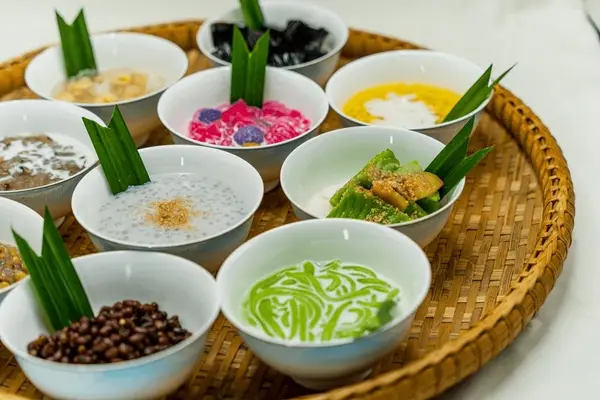
Desserts in Cambodia are usually simple and not overly sweet. Common treats include sticky rice with mango, coconut puddings, palm sugar sweets, and bananas wrapped in sticky rice.
Most desserts are light and made with natural ingredients, which makes them a gentle way to finish a meal.
More than flavors
Khmer cuisine isn’t about trends or trying to impress visitors. It’s about using what the land and water provide.
The food has been shaped by Cambodia’s rivers, its history, and generations of families cooking the same dishes at their tables.
When you eat in Cambodia, you realize that meals are often simple and sometimes unfamiliar, but they are always honest and deeply connected to everyday life.
In the end, Khmer food isn’t trying to impress you — it simply invites you to slow down and enjoy it the way locals do.


Comments